On May 6–7, the SOMMER project consortium convened in Barcelona for a productive 30-month project meeting hosted by the Institut de Recerca en Energia de Catalunya (IREC). The meeting was organised by the “Nanoionics and Fuel Cells” research group, whose work focuses on advancing highly efficient and clean solid-state energy conversion technologies to support a more sustainable society.
Significant progrgress at SOMMER project
The meeting provided an excellent opportunity for a productive exchange on the current progress of the project. Representatives from each work package presented the latest developments and ongoing research activities, fostering valuable discussions and collaboration across the consortium. Overall, the presentations highlighted the strong progress being made in current material developments and experimental work, underlining the project’s continued advancement toward its objectives.
Current work includes:
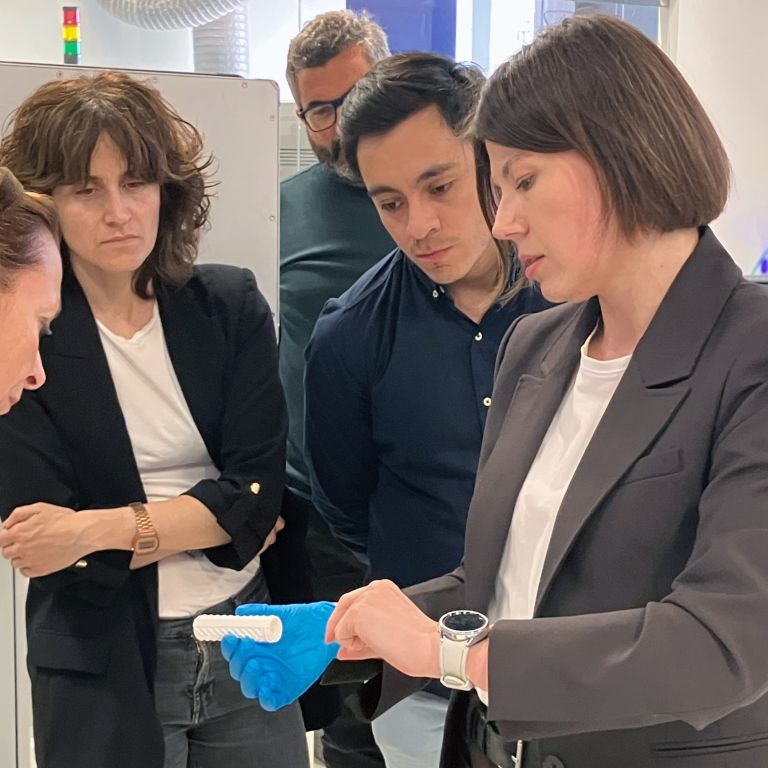
- Manufacturing of the membrane units via extrusion and 3D-printing
- Sealing activities for the membrane units
- Modelling of solar heat integration and optimised membrane geometries
- Design of a solar-powered membrane reactor
- Techno-economic assessment
- Process integration concepts for a cement plant
Toward sustainable syngas production from CO₂ and water
The project consortium is proud of the current state of the research and the significant progress achieved so far toward its shared goal of developing a sustainable technology for converting CO₂ and water into synthesis gas, a key raw material for many chemical products.
Building on the productive discussions and promising results presented during the meeting, the consortium looks forward to the next steps and upcoming milestones of the project.
The project participants would also like to sincerely thank the hosts at the Institut de Recerca en Energia de Catalunya (IREC) for the excellent organisation and warm hospitality throughout the meeting, including an insightful tour of their laboratory facilities, which provided valuable insights into their research infrastructure and activities.